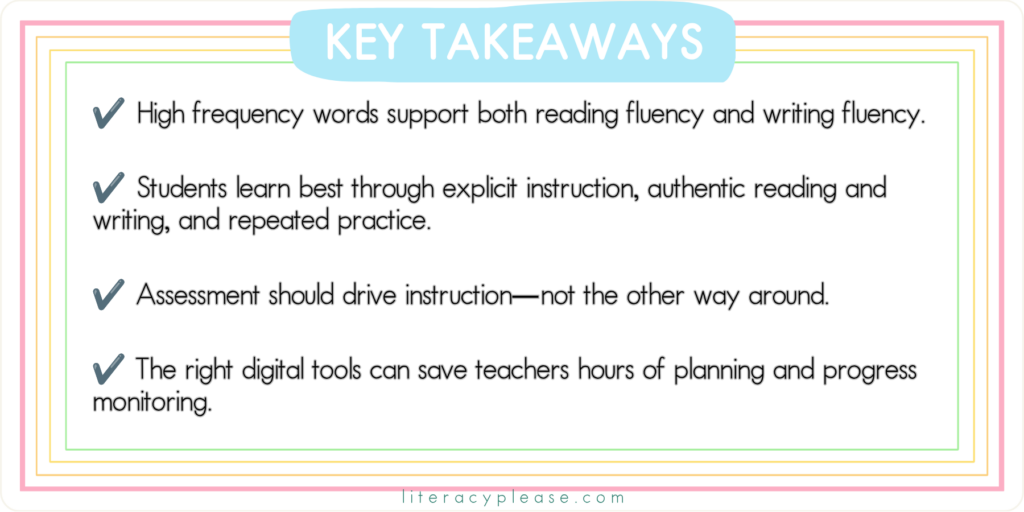
High frequency words are the glue that holds reading and writing together. They allow students to read and write with confidence. They give young readers and writers the tools to read and write with fluency. They eliminate the mental load of “how do I spell” and allow reading and writing to just flow.
What Are High Frequency Words? (And Why Teachers Can’t Agree on What to Call Them)
If you’ve been teaching for any length of time, you’ve probably had this conversation in the staff room…
“Wait…are we calling them high frequency words, sight words, or heart words now?”
The answer is…yes.
Here’s the short version.
High frequency words are the words students see most often in the books they read and the writing they do. Learning these words automatically helps students become more fluent readers and more confident writers.
You may also hear them called sight words or heart words, but they aren’t exactly the same thing.
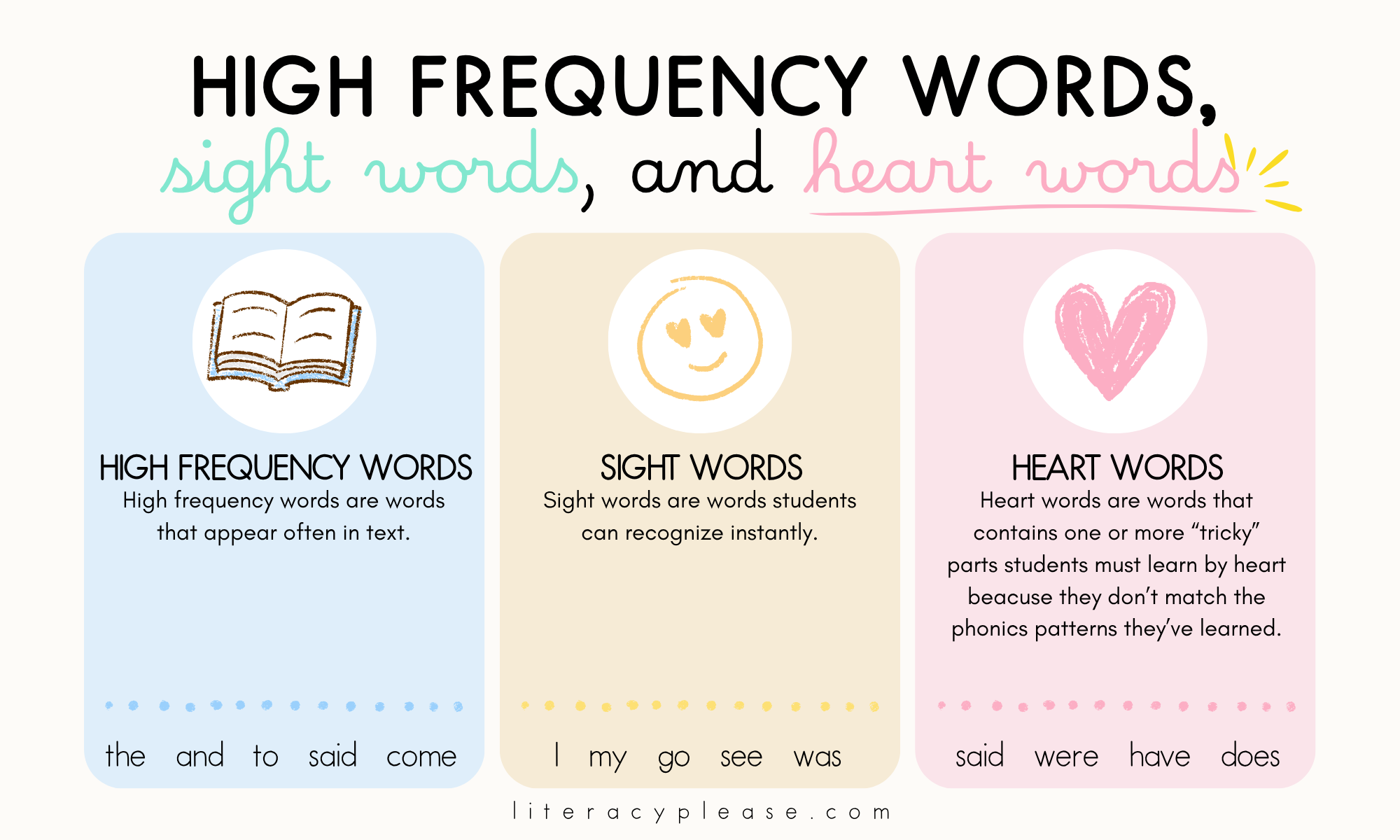
If you’ve wondered about heart words vs. sight words, UFLI heart words, Dolch sight words, or Fry sight words, you’re not alone. Teachers often ask whether they should use the Fry list of sight words, Dolch sight words, or another high frequency words Dolch resource. We’ll sort through all of that in this guide so you can choose what works best for your students.
Fry, Dolch, or Heart Words: Which List Should You Teach?
If you’ve ever wondered whether you should teach Dolch sight words, Fry sight words, or heart words, you’re not alone. It seems like every curriculum has its favorite list.
Here’s the good news: there isn’t one “right” answer.
- Dolch sight words are a list of common words that have been used in classrooms for decades.
- Fry sight words expanded on that idea by creating a larger list based on word frequency, including the well-known Fry First 100 words.
- More recently, many teachers have embraced heart words, especially through UFLI Heart Words, which encourage students to use their phonics knowledge while learning the parts of words that need to be remembered by heart.
No matter which list you use, the goal is the same: help students quickly read and spell the words they use most often. Strong readers and writers aren’t created by the word list itself—they’re created through consistent instruction, meaningful practice, and regular assessment.
So instead of stressing over which list is “best,” choose the one that aligns with your curriculum and teach it well.
How to Assess High Frequency Words Efficiently
Teaching high frequency words is only half the battle. The real challenge is figuring out which words each student actually knows.
Whether you’re using a Dolch sight words assessment, Fry sight words assessment, UFLI sight word assessment, or another high frequency word assessment, the goal is the same: find the gaps so you know what to teach next.
For years, my sight word assessments looked something like this:
✔️ A stack of word lists
✔️ A clipboard
✔️ Sticky notes
✔️ Random papers I swore I’d file later
It worked…sort of.
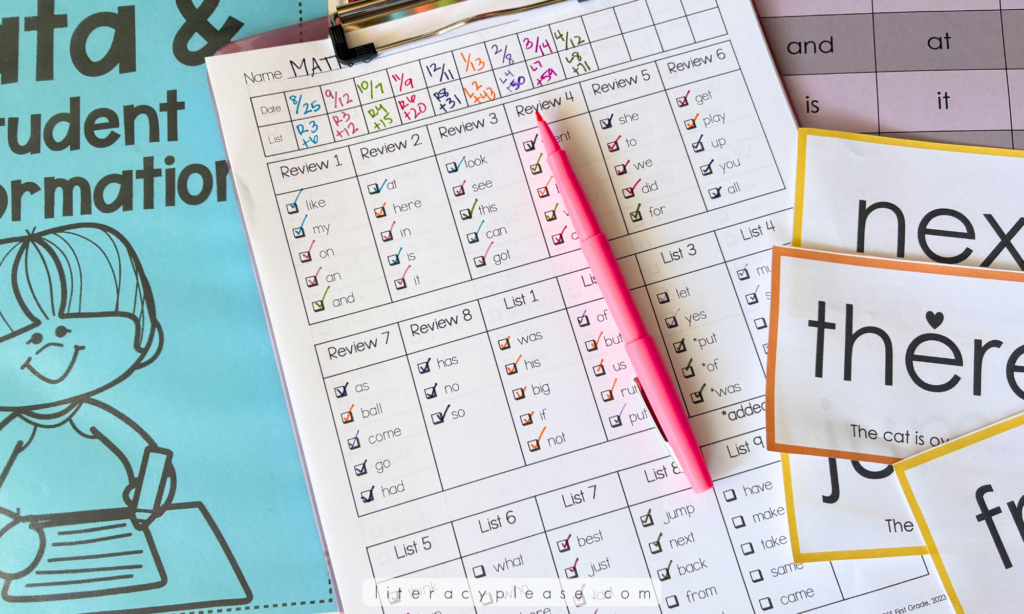
The hardest part wasn’t giving the high frequency word test. It was organizing the results, figuring out who needed intervention, creating groups, and keeping track of student progress throughout the year.
That’s why I created the Literacy Insights High Frequency Words app.
Teachers can assess students using the Dolch sight words, Fry sight words, or UFLI heart words. As students are assessed, the app automatically records errors, identifies the words they still need to learn, groups students with similar needs, and tracks progress over time. No more paper checklists, color-coded sticky notes, no more misplaced tracking sheets or wondering who still needs practice.
Whether you’re looking for a sight word assessment for kindergarten, a Dolch pre-primer sight word assessment, a Dolch sight word assessment chart, or an easier way to manage assessments across your classroom, the goal is the same: spend less time organizing data and more time teaching kids.
Teaching High Frequency Words in Kindergarten
When people search for sight words kindergarten, they’re usually looking for a sight words kindergarten list, sight words kindergarten printables, or a sight words kindergarten worksheet.
While those resources can be helpful, they’re only part of the picture.
Kindergarten students don’t need to memorize long lists of words overnight. They need explicit instruction, repeated practice, and opportunities to use high frequency words while reading and writing.
Whether you’re teaching Dolch sight words for kindergarten or using heart words for kindergarten, focus on a small number of words at a time. Read them in books, build them with magnetic letters, write them in sentences, and revisit them often. The more meaningful the practice, the more likely students are to remember the words when it matters.
Remember, the goal isn’t simply to finish a word list. The goal is to help students become confident readers and writers who can use these words automatically.
High Frequency Words Beyond Kindergarten
It’s easy to think high frequency words are just for kindergarten, but that’s far from the truth.
As students move into first and second grade, they’re reading more challenging texts and writing longer, more detailed pieces. While many students have mastered the basics, others are still working to automatically read and spell common words.
If you’re teaching high frequency words for second graders or looking for sight words for 2nd graders, remember that instruction should go beyond memorization. Continue to weave these words into your phonics lessons, reading instruction, and daily writing opportunities.
The goal isn’t simply to check off another word list. It’s to help students read with fluency, write with confidence, and spend less mental energy figuring out common words so they can focus on understanding and expressing their ideas.
Should You Use Flashcards?
The short answer? Yes—but not by themselves.
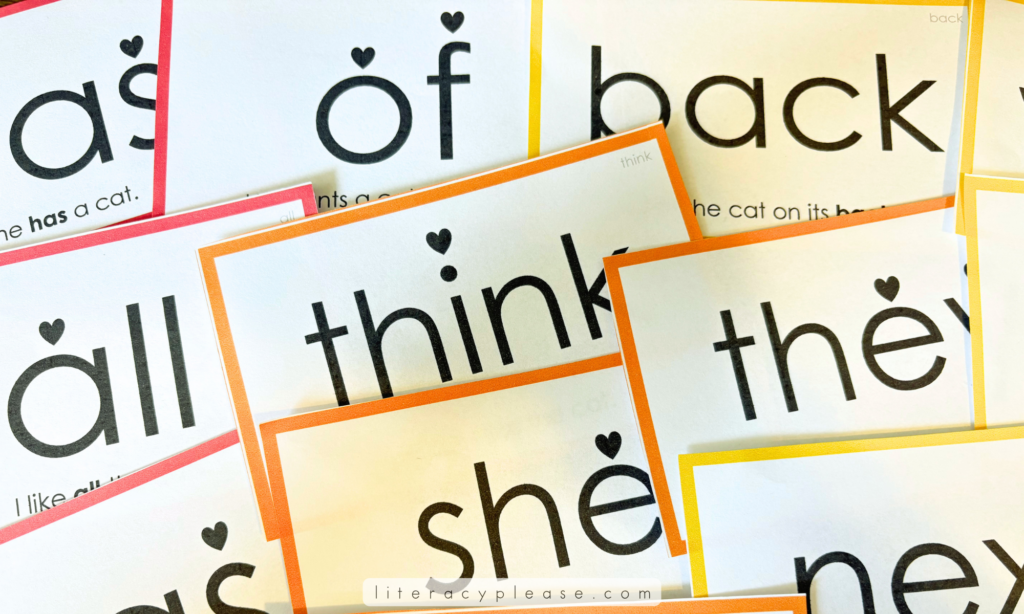
High frequency words flashcards, sight words flash cards, heart words flashcards, and even Dolch sight words pre-primer flashcards or Fry sight words flash cards can be a great way to build automaticity. They give students repeated practice with the words they need to read and spell effortlessly.
The key is remembering that flashcards are practice, not instruction.
Students still need to learn why a word is spelled the way it is, read it in connected text, and use it in their own writing. That’s why I designed the flashcards in the Literacy Insights High Frequency Words app a little differently.
Instead of showing only the word, teachers can print flashcards with a sentence for meaningful context or with Elkonin boxes to help students notice the spelling patterns and map the sounds in each word. It’s a simple addition that encourages students to think about the word and the spelling patterns—not just memorize it.
Think of flashcards as one tool in your literacy toolbox. The best flashcards reinforce the reading and spelling strategies students are learning while giving them the repeated practice they need to build automaticity.
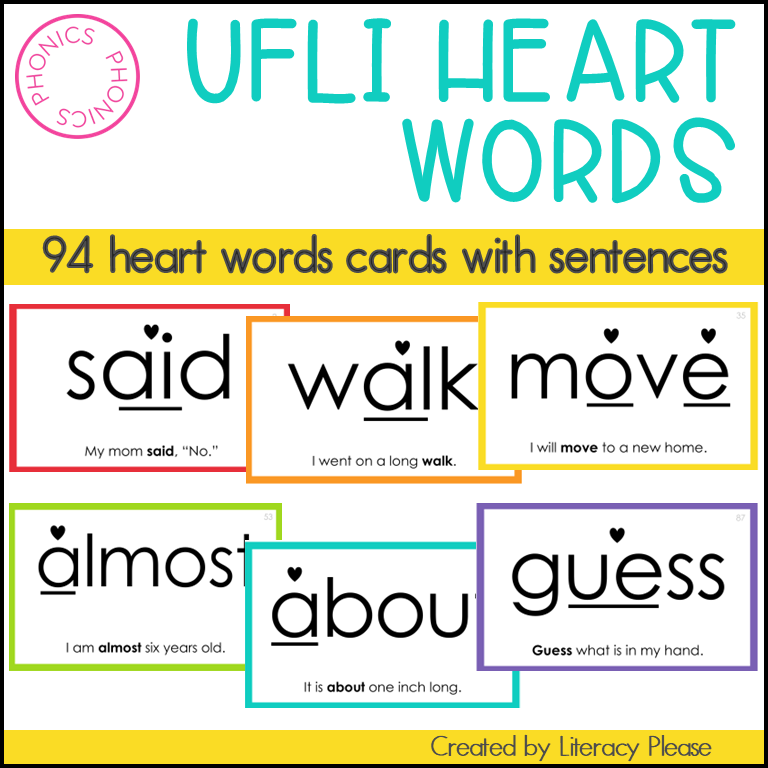
Get these flashcards for free here.
Are Worksheets Enough?
Teachers search for sight words worksheets free, sight words practice sheets, and high frequency words worksheets because they’re quick, easy, and can provide valuable practice.
And there’s absolutely a place for them.
The challenge is that most worksheets give every student the same words, even though every student has different needs. One student may already know all ten words, while another needs practice with completely different ones.
That’s why I believe assessment should come before practice.
When you know exactly which words a student has mastered—and which ones they still need—you can give targeted practice instead of busy work. That’s the idea behind the Literacy Insights High Frequency Words app. After assessing a student, the app creates practice using the words they actually missed, making every worksheet and flashcard purposeful.
The goal isn’t to complete more worksheets. It’s to give students meaningful practice that helps them become stronger readers and more confident writers.
How I Teach High Frequency Words
After 22 years in the classroom, I’ve learned that teaching high frequency words doesn’t have to be complicated. Whether you’re wondering how to teach heart words or introducing a new set of high frequency words, I keep coming back to the same simple routine.
- Teach the word explicitly. If it’s a heart word, talk about the part students can decode and the part they need to “learn by heart.”
- Read the word in context. Students should see the word in books and meaningful sentences, not just on a flashcard.
- Write the word often. One of the best ways to learn high frequency words is to use them in authentic writing. That’s where automatic spelling begins to develop.
- Review and reassess. A quick check lets me know who’s ready to move on and who needs a little more practice.
Notice what’s not on the list: memorizing dozens of words at once.
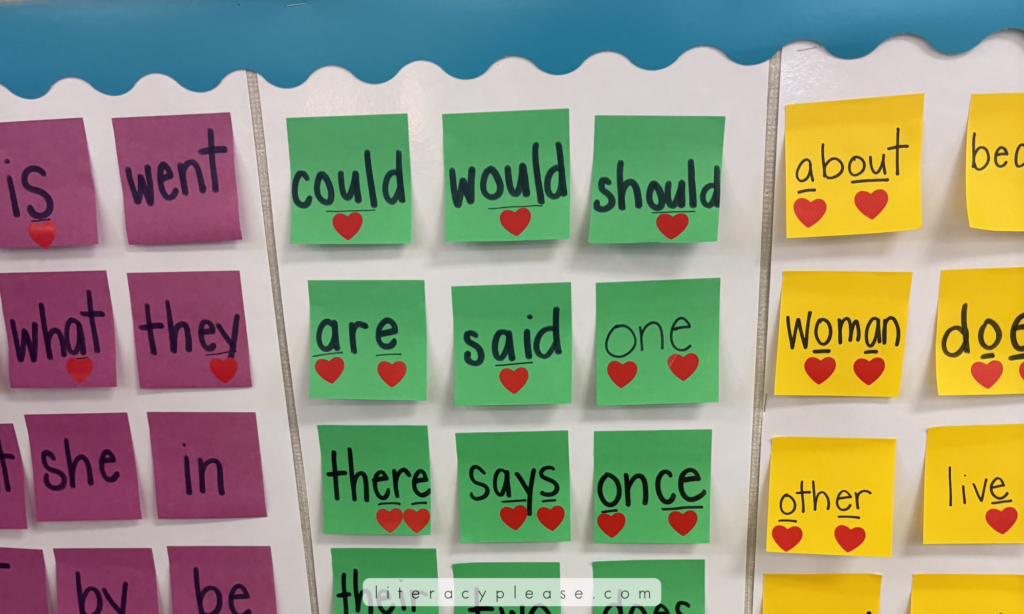
When students read high frequency words, write high frequency words, and revisit them regularly, they build the automaticity that supports both fluent reading and confident writing. That’s the goal—not racing through another word list.
Why I Created a High Frequency Words App
After years of juggling paper assessments, clipboards, sticky notes, and spreadsheets, I kept thinking, there has to be a better way.
I searched for teacher apps, assessment apps, and teacher planning apps, but I couldn’t find one that worked the way I wanted it to. So, I built it. Learn more about my tools here.
The Literacy Insights High Frequency Words app was designed by a teacher, for teachers. It simplifies the entire process—from assessment to instruction—so you can spend less time organizing data and more time working with students.
With the app, you can:
- Assess students using Dolch, Fry, and UFLI word lists in just a few minutes.
- Instantly see which high frequency words each student has mastered and which ones need more practice.
- Automatically group students with similar instructional needs.
- Print targeted flashcards with sentences or Elkonin boxes based on the words each student missed.
- Generate meaningful practice instead of one-size-fits-all worksheets.
- Monitor progress throughout the year without keeping stacks of paper.
Technology should make teaching easier, not more complicated. My goal was never to replace great instruction—it was to take care of the organizing, sorting, and tracking so teachers can focus on what they do best: teaching children to become confident readers and writers.